How to choose a padlock: size, shackle and material
Padlocks that look alike can differ a lot in size, shackle length, locking mechanism and material. This guide explains how to choose a padlock for the job, what the millimetre number means, how short and long shackles differ and what keyed alike means, with the models in our catalogue.
What the millimetre number means
Padlocks are sized in millimetres by the width of the lock body, so a 40 mm lock is about 4 cm wide. A bigger body means a thicker shackle and a larger mechanism inside. Our catalogue runs from 20 mm for cabinets and bags up to 63 mm for gates and warehouses.
Before picking a size, check the hole or hasp you're locking. The shackle has to pass through it cleanly: too thick and it won't fit, too thin for the hasp and it's easier to pry or cut than it should be.
Short or long shackle
Codes ending in S are short-shackle and codes ending in L are long-shackle. Both share the same body size; only the shackle height differs.
Short shackle (S)
Little shackle is exposed, leaving less room for a pry bar or bolt cutters. Best for door hasps and cabinets where the loops sit close together.
Long shackle (L)
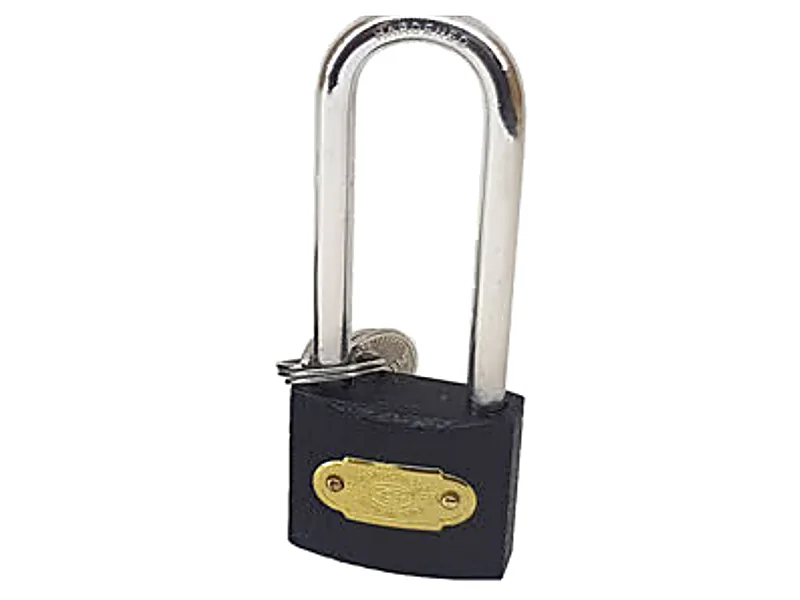
A taller shackle that reaches around heavy chain, hasps set far apart, or several loops at once. Use it when a short shackle won't reach.
Ball-bearing or spring locking
Our catalogue has two main ways of holding the shackle inside the body.
Double ball-bearing locking
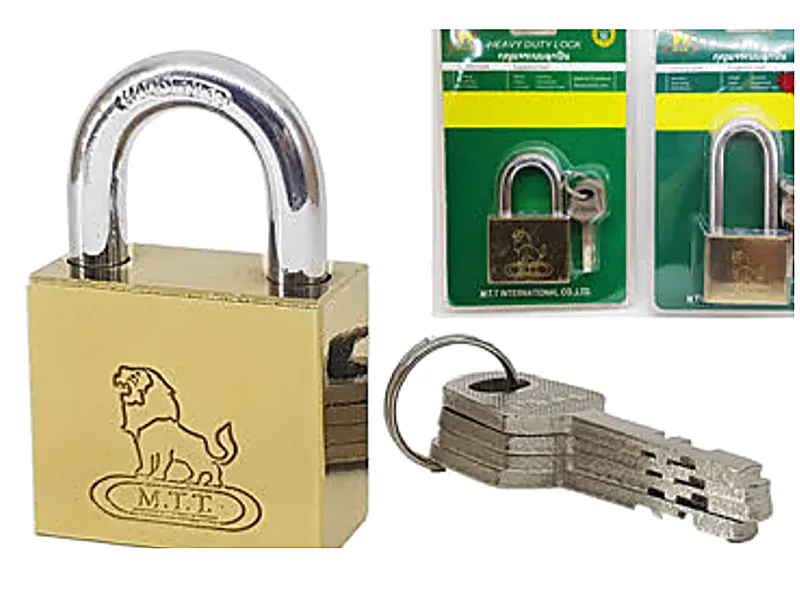
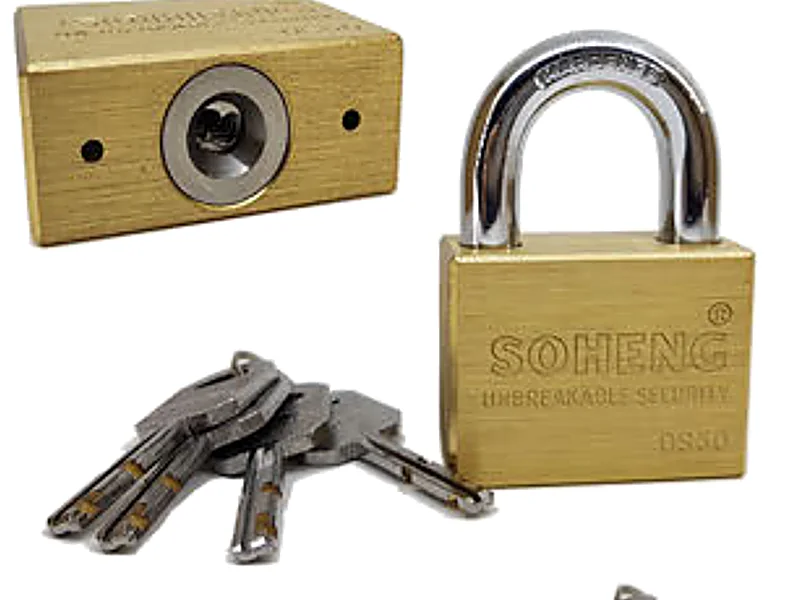
Two balls lock both legs of the shackle, so it is harder to pull or pry open. Our silver lion, gold lion and double-ball brass padlocks use this system, and the catalogue lists an anti-shim washer and a hardened shackle.
Spring locking
A spring-loaded latch holds the shackle. It's the common basic mechanism, fine for everyday use at home or in a shop, like the black steel padlocks.
Solid brass, plated steel or steel
| Material | Strength | Best for |
|---|---|---|
| Solid brass | Brass contains no iron, so it doesn't get red rust like steel. The surface may dull over time. | Damp spots, outdoors, near the sea, bathrooms |
| Brass-plated steel | A steel body plated for looks and rust protection. If the plating scratches through, the steel underneath can rust. | Indoors, cabinets, drawers, doors out of the rain |
| Black steel | Painted or coated steel, sturdy; oil the keyway now and then. | General indoor use |
Keyed alike: one key for several locks
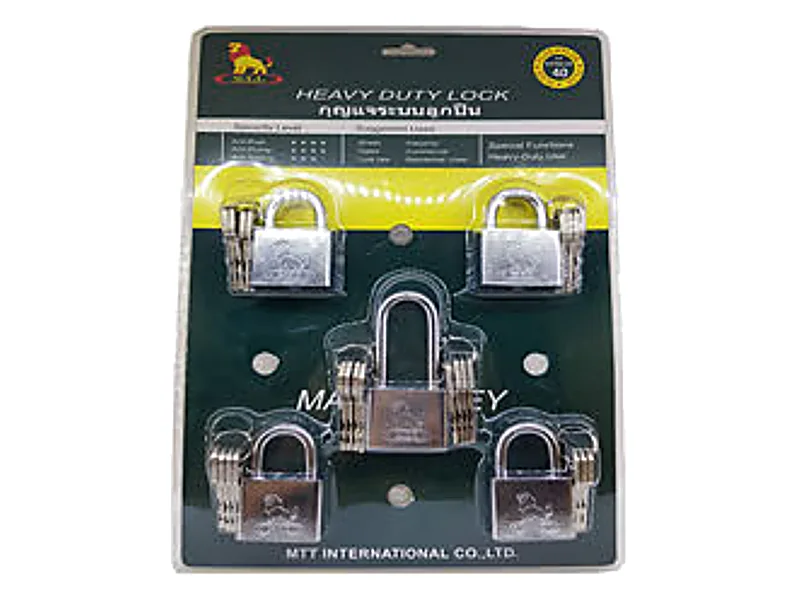
If one person has to open several doors or cabinets, keyed-alike locks save carrying a big bunch: every lock in the set opens with the same key. Our M.T.T. silver lion keyed-alike sets come as 3 locks (2 short, 1 long shackle) or 5 locks (4 short, 1 long) in 40 and 50 mm. The catalogue says each lock has 4 keys of its own plus 4 keys that open every lock in the set.
Pick by the job
| Job | Suggested | Why |
|---|---|---|
| Cabinets, lockers, bags | 20–32 mm, short shackle | Small hasps, and the lock stays out of the way |
| House doors, gates, shopfronts | 40–50 mm, short shackle, ball-bearing | A thicker shackle, with little room for tools |
| Heavy chain, hasps set apart | Long shackle (L), same size as for doors | A short shackle won't reach |
| Outdoors, damp, near the sea | Solid brass | The body won't rust the way steel does |
| Several doors, one keyholder | A keyed-alike set | One key opens them all |
Keeping a padlock working
Outdoor locks usually stiffen because dust and moisture get into the keyway. Every so often put a little thin lubricating oil into the keyway and at the base of the shackle, then work the key in and out a few times. If a key feels stiff, don't force it, or it may snap off in the lock.
Shops buying to resell can see pack and carton counts for every code on the padlock catalogue page. For example, the 30 mm silver and gold lion locks pack 12/144 and the 50 mm size packs 12/72.
Common questions
Where is a 40 mm padlock measured?
Across the width of the lock body, not the height or thickness of the shackle.
What's the difference between short and long shackle?
Same body size; the shackle height differs. A short shackle is harder to pry or cut, while a long one reaches heavy chain or hasps set far apart.
What does keyed alike mean?
Several locks in one set that all open with the same key, handy if you open several doors or cabinets.
Do brass padlocks rust?
Brass contains no iron, so it won't get red rust like steel, though the surface may dull or darken with age. A hardened steel shackle still benefits from a drop of oil now and then.
Can I buy by the dozen or carton?
Yes. Pack and carton counts are on the padlock page. Prices aren't listed on the site, so send the codes on LINE and we'll quote retail and wholesale.
Read next
Not sure which padlock? Ask on LINE
Send a photo of the hasp or door and our Sampheng team will suggest a size and model.