How to use a spirit level and plumb bob, and check a level for accuracy
Spirit levels and plumb bobs are the basic measuring tools of building work, used to check that floors, shelves, walls and posts are level or plumb. This guide explains how to read a level, how to check it for accuracy, how to use a plumb bob and which size suits the job, with models from the WYNNTOOLS catalogue.
How to read a spirit level
A spirit level has a vial filled with liquid and an air bubble. On a level surface the bubble sits exactly between the two lines; if it drifts to one side, that side is higher.
Horizontal vial
For floors, shelves, tables, window sills and tile lines. Lay the level flat along the surface and read the bubble.
Vertical (plumb) vial
For posts, door frames and walls. Hold the long edge against the upright surface and read the vial set across the body.
Angled vial
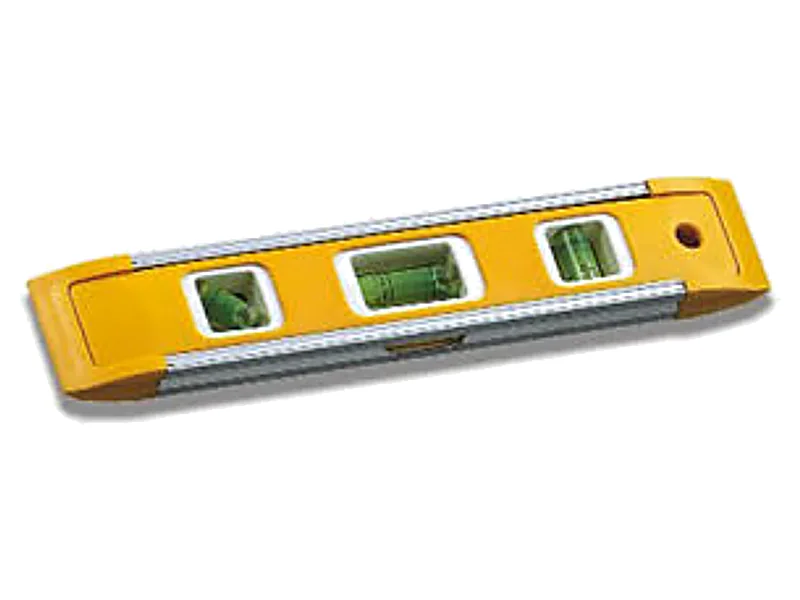
Some models add a third vial for angles, like the W0082 230 mm magnetic level, which the catalogue lists with vertical, horizontal and angled vials.
Checking a level for accuracy
A level that has been dropped or knocked can go out of true. You can check it yourself by reversing it, with no other tools.
Place it and mark it
Set the level on a flat, firm surface such as a table. Pencil a mark at both ends and note where the bubble sits.
Turn it end for end
Rotate the level 180 degrees so the ends swap, and put it back on the same marks.
Compare the bubble
If the bubble reads the same as before, the level is accurate, even if the table itself isn't level. If it reads differently, the vial is off.
Check the vertical vial too
Hold the level against a frame or wall, draw a line along its edge, then flip it face to back on the same line. The bubble should read the same.
If a level with fixed vials fails the check, replace it. On long runs of tile or shelving, a small error adds up until it shows.
Long or short level
| Job | Suggested | Why |
|---|---|---|
| Pictures, small shelves, inside cabinets | Mini 100 mm level or 225 mm torpedo | Short enough for tight spots and a toolbag |
| Pipe, steel and metal frames | W0332B magnetic torpedo or W0082 | The magnet holds it on steel, leaving both hands free |
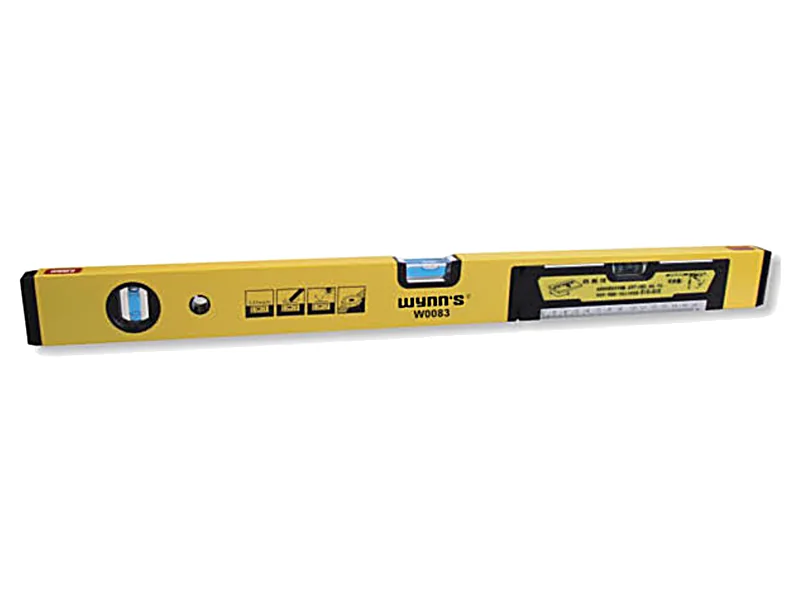
| Tiling, floors, decks | W0083 600 mm folding level or W0094A-25B 2 ft | Longer, so it spans several tiles and shows slope more clearly |
| Door frames, building work | W0091D 2 ft aluminium level | The catalogue lists it for civil and building work, with a hand grip |
| Marking square lines in wood | W0266B combination square or a triangle square | For marking right angles; the combination square has a built-in vial |
Using a plumb bob
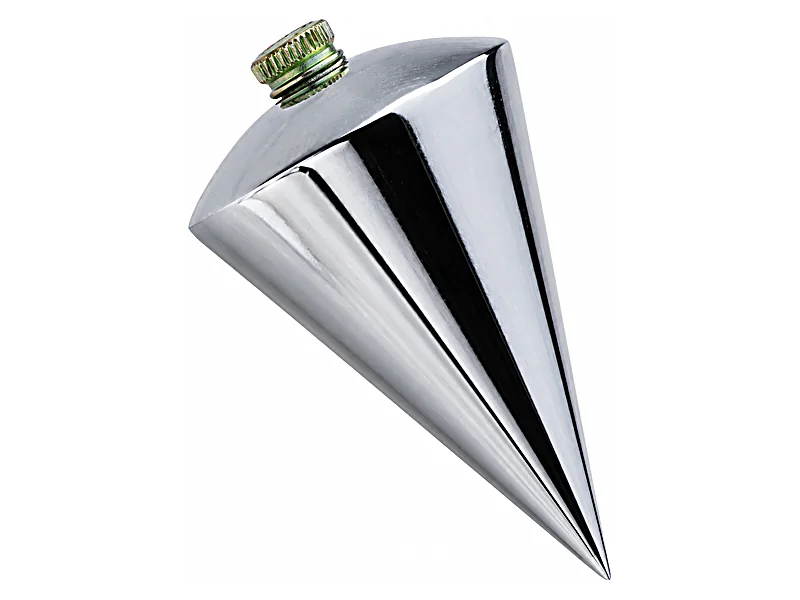
A plumb bob is a pointed weight on a string. Once it hangs still, the string always points straight down with gravity, so it finds a vertical line taller than a level can reach, or transfers a point from ceiling to floor.
Hang it from a fixed point
Fix the string at the top with a nail or clamp, slightly off the wall so the bob doesn't touch it.
Let it settle
Let go and wait for it to stop swinging. In a draught, shield it or use a heavier bob, which swings less.
Measure top and bottom
Measure from the string to the wall at the top and at the bottom. Equal distances mean the wall or post is plumb; where the gap is smaller, the surface leans out.
Transfer a point to the floor
Hang the string from a point on the ceiling; once the bob is still, its tip marks the matching spot on the floor.
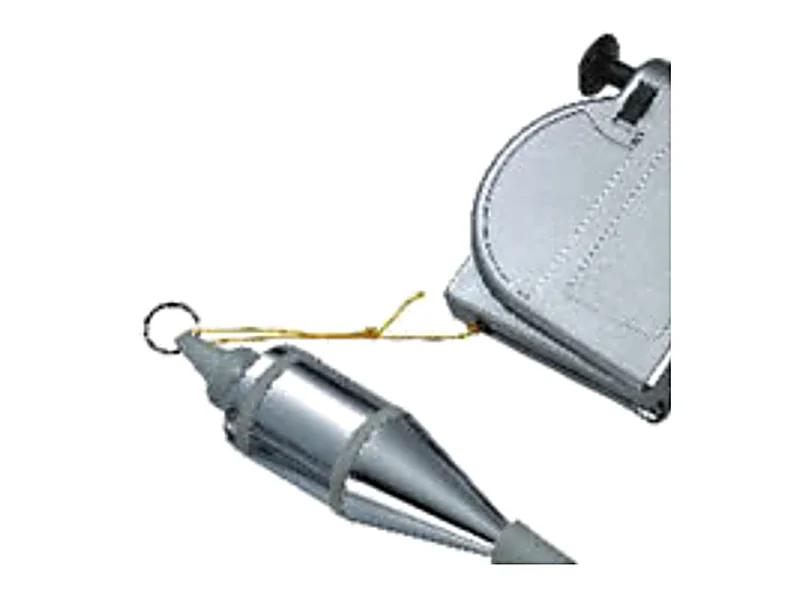
The catalogue has 300, 400 and 500 g plumb bobs, and the W0235 and W0236 plumb bobs with magnetic cases that reel in 3 m and 6 m of line, stick to steel and lock the line automatically.
Common questions
Where should the bubble be when it's level?
Centred exactly between the two lines on the vial. If it touches one line, that side is higher.
Is a level still good after a drop?
Run the end-for-end check above. If the bubble reads the same both ways it's fine; if not, replace it.
How is a plumb bob different from a level?
A level reads both horizontal and vertical, but only over its own length. A plumb bob finds vertical over the whole length of its string and can carry a point down from height.
How heavy should a plumb bob be?
Indoors over short drops a light bob is fine. With long strings or wind, a heavier one settles faster. The catalogue has 300, 400 and 500 g.
Can I buy by the carton?
Yes. Pack and carton counts are on the measuring tools page. Send the codes on LINE for retail and wholesale prices.
Read next
Not sure which level? Ask on LINE
Tell us the job and our Sampheng team will suggest a model and size.