Brass padlocks: solid brass vs plated, and where brass is worth it
Brass padlocks are the pick for locking up outdoors or in damp places because they don't rust like steel. But locks sold as brass may be solid brass, have a brass cylinder, or be brass-plated steel. This guide explains the difference, how to tell solid brass, where brass is worth it, and the sizes in our catalogue.
Why brass padlocks don't rust
Brass is an alloy of copper and zinc with no iron in it, so it doesn't get the red rust you see on steel padlocks. That's why brass locks are the usual choice for gates, bathrooms and seaside homes, where damp and salt air rust steel locks until the key won't turn.
Brass doesn't keep its shine forever. Over time the surface dulls or darkens, and in damp or seaside air a green film can form. These stay on the surface; they don't eat into the metal the way rust eats steel.
Three kinds of "brass" padlock
"Brass padlock" on a label can mean several things. Know which one you're buying, because they don't resist rust equally.
| Kind | What it is | In our catalogue |
|---|---|---|
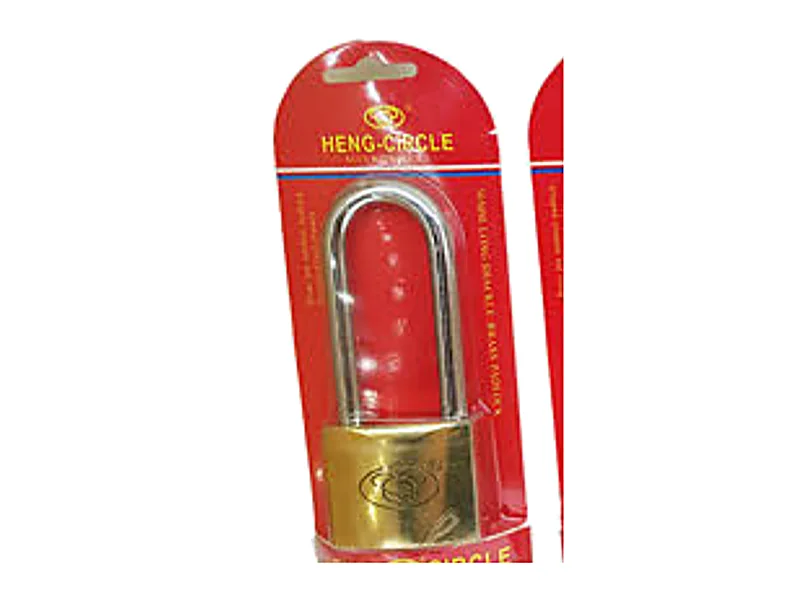
| Solid brass | The body is cast brass. The most rust-resistant of the three. | Heng brass padlocks on cards (84 series), boxed Heng brass padlocks and solid brass double ball-bearing padlocks |
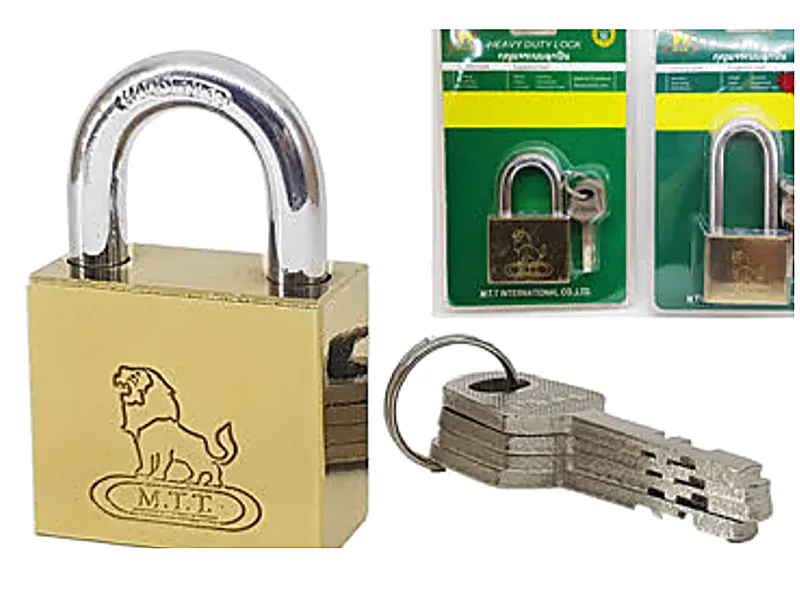
| Brass cylinder | The cylinder, where the key goes in, is brass, so the key keeps turning smoothly in damp spots. | M.T.T. gold lion padlocks; the catalogue lists a solid brass cylinder |
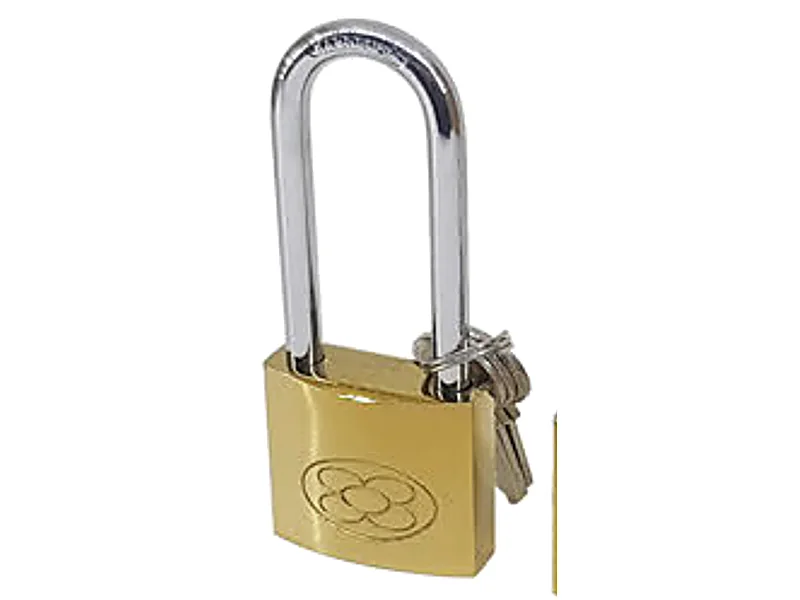
| Brass-plated steel | A steel body plated gold. If the plating wears through, the steel inside can rust. | Lucky brass-plated padlocks |
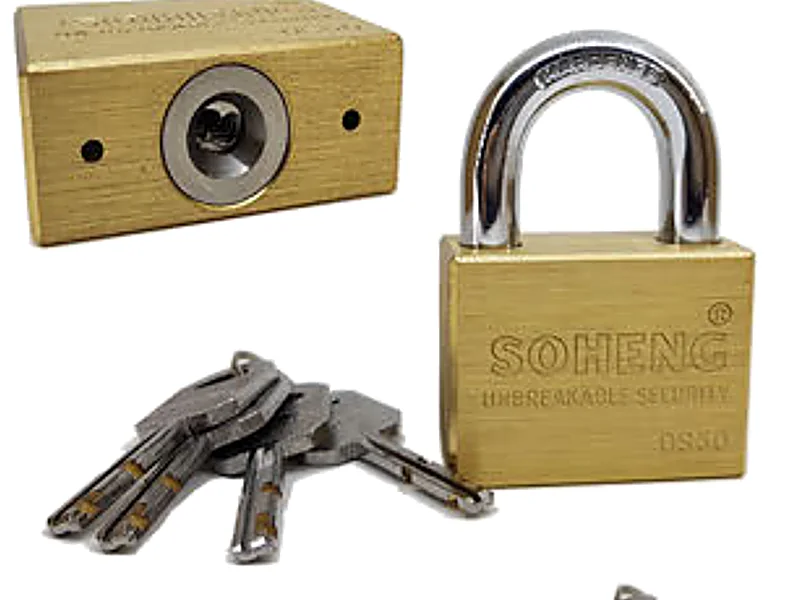
How to tell solid brass
Touch the body with a magnet
Brass isn't magnetic. If a magnet grips the body firmly, there's steel inside. Test the body, not the shackle: the shackle is hardened steel and a magnet will stick to it even on a solid brass lock.
Look at any scratches
If a scratch or worn edge shows silvery grey metal, it's plated steel. If the metal underneath is the same gold as the surface, it's brass.
Check the pack or catalogue
The catalogue lists solid brass and brass-plated steel separately. Check each model's material on the padlock page, or send a photo on LINE.
Is brass strong enough?
Brass is chosen for rust resistance; it isn't as hard as hardened steel. The part that usually gets cut or pried is the shackle, and every brass padlock in our catalogue has a hardened shackle. For more resistance to forcing, pick double ball-bearing locking and a short shackle, which leaves less room for tools.
For ball-bearing locking, shackle length and sizing, see how to choose a padlock.
Sizes and pack counts
| Range | Sizes | Pack |
|---|---|---|
| Heng brass, boxed | 20, 25, 32, 38, 50, 63 mm; long shackle in 25, 32, 38, 50 mm | 20 mm 12/600 · 50 mm 6/60 · 63 mm 6/36 |
| Heng brass on cards (84) | 20, 25, 32, 38, 50 mm; long shackle in 32, 38, 50 mm | 6 per pack |
| Solid brass, double ball-bearing | 40 and 50 mm, short and long shackle | 12 per pack |
| M.T.T. gold lion, brass cylinder | 30, 40, 50 mm, short and long shackle | 30 mm 12/144 · 40 mm 12/96 · 50 mm 12/72 |
| Lucky, brass-plated steel | 25, 32, 38, 50 mm; long shackle in 32, 38, 50 mm | 25 mm 6/360 · 50 mm 6/60 |
A figure like 6/60 means 6 per pack and 60 per carton. For shops reselling, carded locks suit a hanging display, while boxed locks suit stock and sales by the dozen.
Where brass is worth it
| Location | Suggested | Why |
|---|---|---|
| Gates and doors in the rain | Solid brass, 40–50 mm | Rain and sun every day, and the body won't rust |
| Seaside homes, boats | Solid brass | Salt air rusts steel quickly |
| Bathrooms, pump rooms, damp stores | Solid brass or a brass cylinder | Damp stiffens steel cylinders |
| Cabinets, drawers, indoor rooms | Brass-plated steel is enough | Kept dry, the plating lasts |
Looking after a brass padlock
If the surface dulls or stains, wipe it with a cloth and mild soapy water, then dry it; there's no need to scrub. Every so often put a little thin oil or graphite powder in the keyway and work the key a few times. Don't sand or harshly polish brass-plated steel, which strips the plating and lets the steel rust.
For other metal tools, see keeping hand tools from rusting.
Common questions
Do brass padlocks rust?
Solid brass won't get red rust because it has no iron, though it can dull or turn green in damp air. Brass-plated steel can rust once the plating wears through.
A magnet sticks to the shackle. Is it fake brass?
No. The shackle on a brass padlock is hardened steel, so a magnet will stick to it. Test the body instead.
Solid brass vs brass-plated?
Solid brass is brass all the way through and resists rust better, so it suits outdoor and damp spots. Plated is steel with a gold finish, fine indoors.
What is a brass cylinder?
The cylinder is the part the key goes into, with the mechanism inside. A brass cylinder copes well with damp and keeps turning smoothly, as on the M.T.T. gold lion padlocks, which the catalogue lists with solid brass cylinders.
Can I buy by the dozen or carton?
Yes. Pack and carton counts for each code are on the padlock page. Prices aren't listed on the site, so send the codes on LINE for retail and wholesale prices.
Read next
Which brass padlock? Ask on LINE
Tell us where it goes and the hasp size, and our Sampheng team will suggest a model.